If you are building a new pool in California, the rules around how you heat it have changed. As of 2026, the state’s updated Title 24 Building Energy Efficiency Standards require that new pools and first-time heating installations use solar or another renewable source as the primary pool heater. A gas heater alone no longer meets the code. For residential pool owners and commercial facilities, this is a significant shift. As it turns out, the solar pool heater California now requires is also the most practical and cost-effective way to comply.
What Is Title 24 and Why Does It Affect Your Pool?
Title 24 is California’s Building Energy Efficiency Standards, a set of rules updated every few years by the California Energy Commission. The goal is to reduce energy use across homes and commercial buildings throughout the state.
Pool heating has been one of the more energy-intensive parts of homeownership. This is especially the case in California, where pools are common and often run for long seasons. Gas heaters are effective, but they burn fuel every time they run, which adds up quickly in both cost and emissions.
The 2026 update to Title 24 addresses this directly. For any new pool construction or first-time heating installation, gas can no longer serve as the sole or primary heat source. The primary system now must come from a renewable source. Solar thermal heating is the most widely used way to meet that requirement.
Does This Apply to Existing Pools?
If you are replacing a broken heater on an existing system, you are typically exempt from the new primary-source requirements. That situation is classified as a repair rather than a new installation. However, if you are going to add heating to a pool or build a new pool entirely, the updated Title 24 standards apply.
It is worth checking with a licensed contractor in your area to confirm how your specific project is classified before any work begins.
Title 24 Requirements for Solar Pool Heater California Installations
The specifics matter, and the sizing requirements are clearly defined. California’s updated code sets minimum solar collector coverage based on whether the pool is residential or commercial.
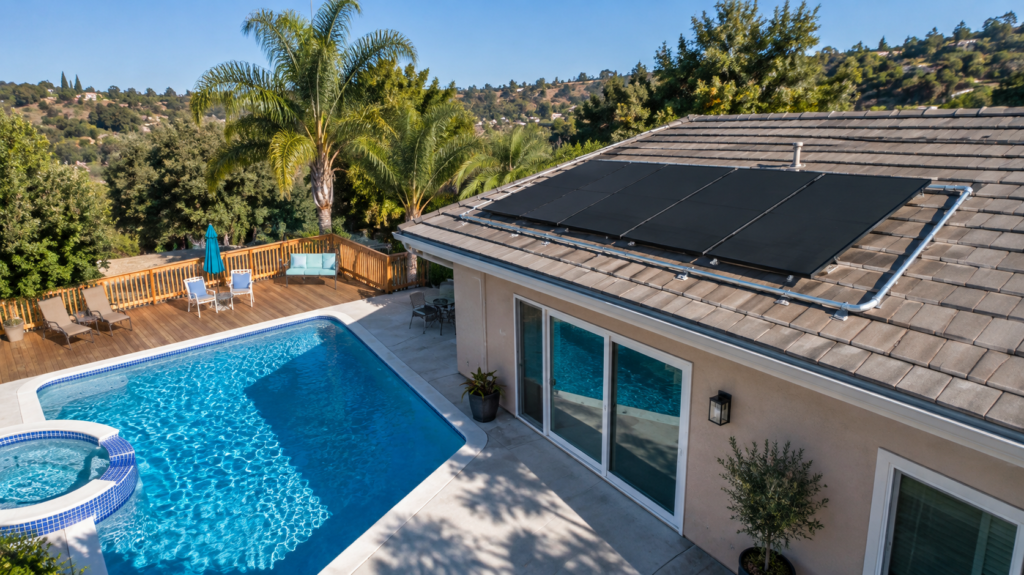
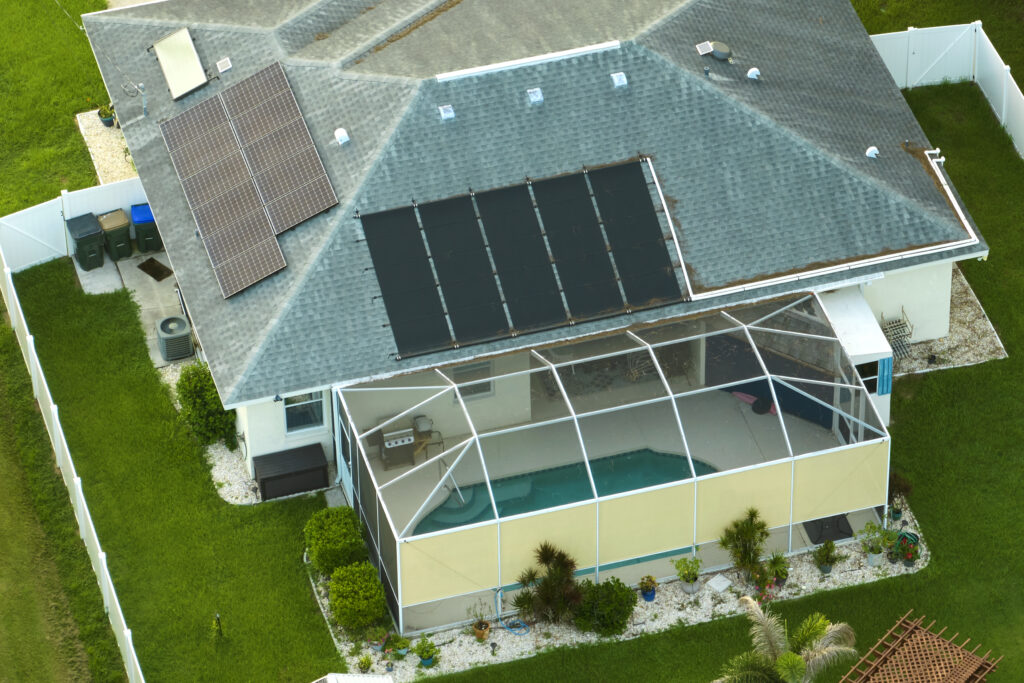
For residential pools, the solar pool heater California installs must cover at least 60% of the pool’s surface area. For nonresidential pools, including hotel pools, gym facilities, and school aquatic centers, that number rises to 65%. In both cases, solar must be installed as the primary heat source before any gas backup is added.
The code also includes a few other requirements that apply to new pool construction:
- All new pools must be built “solar-ready,” meaning the plumbing must be installed to allow a solar system to be added later, even if no heater is installed at the time of construction.
- If a heat pump or gas backup is included, a pool cover is required to reduce heat loss.
- Equipment must be compatible with Smart Grid controls, which enable energy use to be optimized during peak-demand hours.
Review the Title 24 update overview for a breakdown of how solar pool heater California requirements work.

Why Is Solar Thermal the Most Common Way to Comply?
There are a few paths to meeting Title 24 requirements, including electric heat pumps and hybrid systems. But solar thermal heating remains the most widely chosen option, and for good reason.
It has no ongoing fuel cost. Once the system is installed, the sun does the work. There are no monthly bills tied to the heating system itself. Making it a strong long-term choice compared to heat pumps that still draw electricity to operate.
Solar pool heater California contractors and pool builders have also worked with solar thermal systems for decades. The technology is proven, the installation process is well understood, and qualified dealers and installers are available throughout the state.
For homeowners already spending hundreds of dollars a month on gas heating, the shift to solar often reduces those costs significantly over time. Understanding how solar pool heating works can help explain why so many pool owners choose it even beyond compliance requirements.
What About Hybrid Systems?
A hybrid setup pairs a solar thermal system with a gas heater or heat pump as a backup. This is a common approach for pool owners who want the reliability of gas during stretches of cooler or overcast weather while still meeting the Title 24 requirement that solar serve as the primary source.
In a hybrid system, solar preheats the water and handles most of the heating load. The gas backup activates only when solar output is insufficient to reach the target temperature. This setup can dramatically reduce gas usage compared to a standalone gas heater.
How Does This Affect Commercial Pools?
California commercial solar pool heating requirements under Title 24 are slightly stricter than residential ones, reflecting the higher energy demands of these facilities.
Hotels, fitness centers, schools, and community aquatic programs often run their pools year-round and at higher temperatures than a typical residential pool. That level of demand makes gas heating extremely costly. The updated code pushes these facilities toward a more sustainable approach.
For commercial pool operators, there is also a practical benefit beyond compliance. Reducing dependence on gas heating lowers operating costs over time. Solar systems at a commercial scale can offset a meaningful portion of those expenses. For facilities with available roof space or rack mounting options, solar thermal is often a straightforward installation.
Operators managing commercial pools can explore system options designed specifically for higher-demand environments.
Time to Meet California’s Pool Heating Requirements
At Aquatherm, we have been manufacturing solar pool heating systems since 1976, and our products are built and warranted in the United States. California pool owners and commercial facilities across the state rely on our systems to meet Title 24 requirements. Whether you are building a new pool, adding heating for the first time, or advising customers as a pool dealer, our network of trained dealers is ready to help you find the right system. Find a dealer near you or learn more about residential solar pool heating to get started!

Solar Pool Heater California FAQs
Does California require solar on all new pools?
As of January 1, 2026, California’s Title 24 requires that new pools and first-time heating installations use solar thermal or another renewable energy source as the primary heat source. Gas alone no longer meets the code for new construction. Existing pools replacing a broken heater are generally exempt from these requirements.
What size solar system is required under Title 24?
Residential pools require a solar thermal system covering at least 60% of the pool’s surface area. Nonresidential pools, including hotels, gyms, and schools, require at least 65% coverage. In both cases, solar must be designated as the primary heat source before any gas backup is permitted.
Can I still use a gas heater with a solar system?
Yes. Gas heaters are still allowed under Title 24 as a backup heat source. In a hybrid system, solar serves as the primary heat source and handles most of the heating load. Gas is activated only when solar output is insufficient, significantly reducing fuel usage and operating costs compared to a standalone gas system.
What does it mean for a pool to be solar-ready?
A solar-ready pool has specific plumbing installed during construction that allows a solar thermal system to be added later. This includes proper pipe connections and clearance for solar control valves. California now requires all new pools to be built solar-ready, even if no heater is installed at the time of construction.
Do Title 24 requirements apply to commercial pools in California?
Yes. California commercial solar pool heating requirements under Title 24 apply to hotels, gyms, schools, and other nonresidential pool facilities. These facilities must install a solar thermal system covering at least 65% of the pool surface area as the primary heat source for any new pool or first-time heating installation.