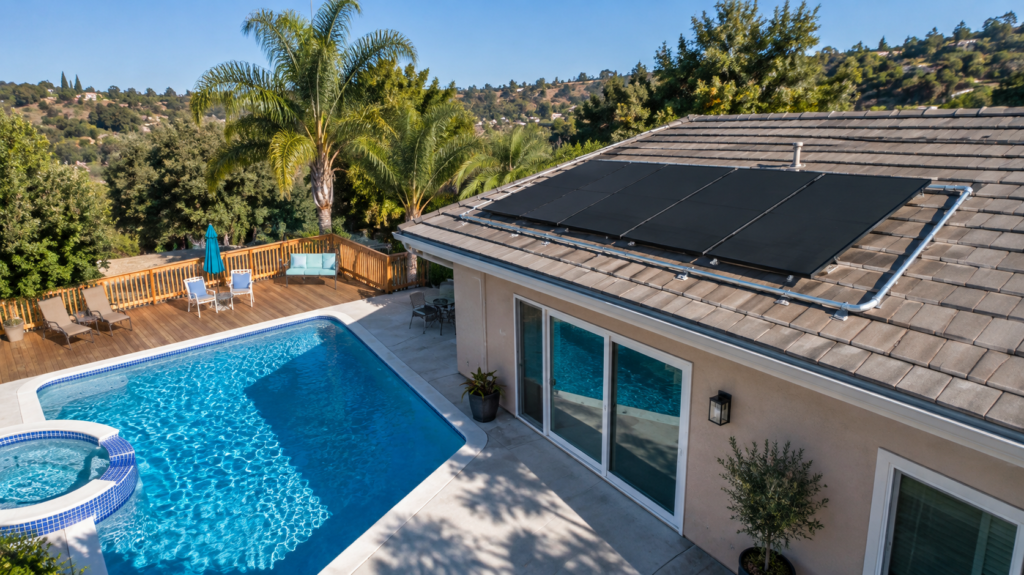
If you are a California homeowner planning to build a swimming pool, you need to be aware of the “California pool heater law”—formally known as the Title 24 Building Energy Efficiency Standards. As of January 1, 2026, the state has implemented rigorous new requirements that change how pools are heated, moving away from traditional fossil fuels toward sustainable alternatives.
The Core Change: Moving Beyond Gas
The most critical update to the California pool heater law is the restriction on standalone gas heating. For new pool constructions or first-time heating installations, a gas heater can no longer serve as the primary heat source. Instead, the law mandates the use of:
- Solar Thermal Systems: Capturing the sun’s heat directly for the water.
- Electric Heat Pumps: Utilizing high-efficiency ambient air exchange.
- Hybrid Solutions: Where gas is strictly a backup to a renewable primary system.
Compliance via Solar Thermal
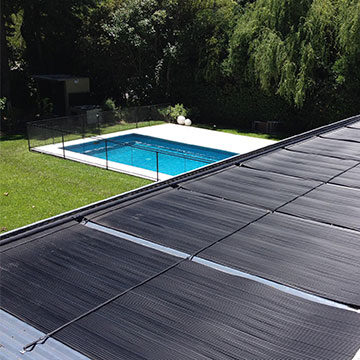
Solar heating remains the most cost-effective way to comply with the new California pool heater law. To meet Title 24 standards, your system must adhere to specific sizing mandates:
- Residential Requirements: A solar thermal system equal to least 60% of the pool’s surface area; must be installed as the primary heater
- Nonresidential Requirements: A solar thermal system equal to least 65% of the pool’s surface area; must be installed as the primary heater
Mandatory Infrastructure: “Solar-Ready” Pools
Even if you aren’t planning on installing a heater at the time the pool is built, the law requires all new pools to be “solar-ready”. This means your builder must install specific plumbing—including an 18-inch clearance for solar valves and piping connections —to ensure a solar thermal system can easily be added later.
Additional Efficiency Requirements
To further reduce energy waste, the California pool heater law includes these “must-haves”:
- Mandatory Covers: If you use a heat pump or gas backup, a pool cover is now required to retain heat.
- Smart Automation: Equipment must be compatible with “Smart Grid” controls to optimize energy use during peak hours.
- Repair vs. New Build: If you are simply replacing a broken heater on an existing system, you are generally exempt from these new primary-source rules, as it is classified as a “repair”.
Why This Law Matters
While these regulations may seem complex, they are designed to protect homeowners from volatile energy prices and support California’s green energy goals. By choosing solar or heat pump technology now, you avoid the high operational costs associated with gas while ensuring your property remains fully compliant with state law.
Is your pool project compliant? Consult with an Aquatherm Dealer in your local area today to ensure your plans meet the latest California pool heater law requirements.