You already have a pool heater. It does its job, but every time it runs, the utility bills increase. What if you could keep the heat and lose most of the cost? A pool solar heater makes that possible.
Instead of replacing your current system, solar works alongside it. The panels handle most of the heating, using free energy from the sun, so your gas or electric heater runs far less often. The result is a warmer pool, a longer swim season, and noticeably lower monthly costs. If you have been holding off on solar because you already have a heater, this is worth understanding.
Can You Add a Pool Solar Heater to an Existing System?
Yes, and it is more straightforward than most people expect. A solar heater for swimming pool use does not require you to tear out or abandon your current setup. A qualified installer integrates solar collectors with your existing pool plumbing, working with the pump and filtration equipment you already have.
Once installed, water is diverted from your pool through the solar panels during daylight hours. The sun heats it, and it flows back in. Your existing heater stays connected and kicks in whenever solar output alone is not enough to hit your desired temperature.
This setup is called a hybrid pool heating system, and it is one of the most popular and economical ways to heat a pool.
How Does a Hybrid Pool Heater Work?
In a hybrid pool heater setup, solar thermal panels handle the majority of the heating load during the day. They preheat the water to a higher baseline before it ever reaches your gas or electric unit. That means your backup heater has far less work to do when it runs, which significantly reduces fuel consumption.
Here is what that process looks like day to day:
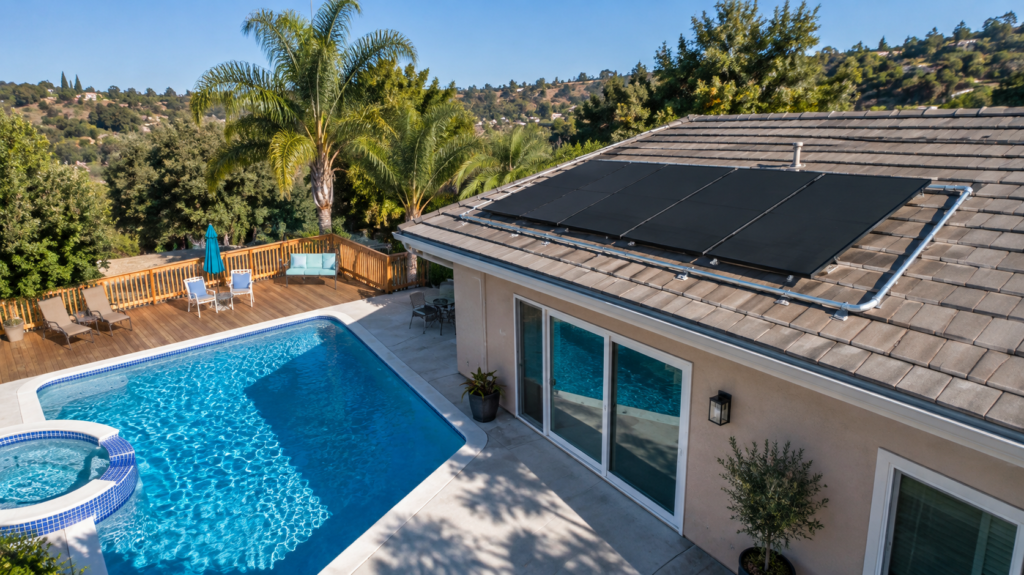
- Your existing pump circulates water through solar collectors mounted on a roof or ground rack.
- An automated valve monitors conditions and bypasses the collectors when solar energy is insufficient.
- The collectors absorb heat from the sun and transfer it to the passing water.
- Warmed water returns to the pool, steadily raising the temperature throughout the day.
- Your gas or electric heater activates only when needed to reach the set temperature.
Solar does the heavy lifting, and your backup fills in the gaps. Learn more about how solar pool heating works to see the full process.
How a Pool Solar Heater Helps You Save
Gas and electric pool heaters can add up quickly, especially during shoulder seasons when you need heat to keep the water comfortable. A solar heater for swimming pool use eliminates most of that expense because the energy source, sunlight, is free.
How Much Can You Save?
Savings vary based on climate, pool size, and current usage. That said, a properly sized pool solar heater can reduce heating costs by 50% or more, depending on your property’s solar access. For homeowners spending hundreds of dollars a month on gas, those numbers add up fast.
Solar systems also tend to have long service lives with minimal maintenance, making the return on investment stronger over time.

Is Solar Pool Heating Right for Your Setup?
While solar pool heating offers significant benefits, a few considerations can help determine how well it will perform for your pool specifically.
Roof Space and Sun Exposure
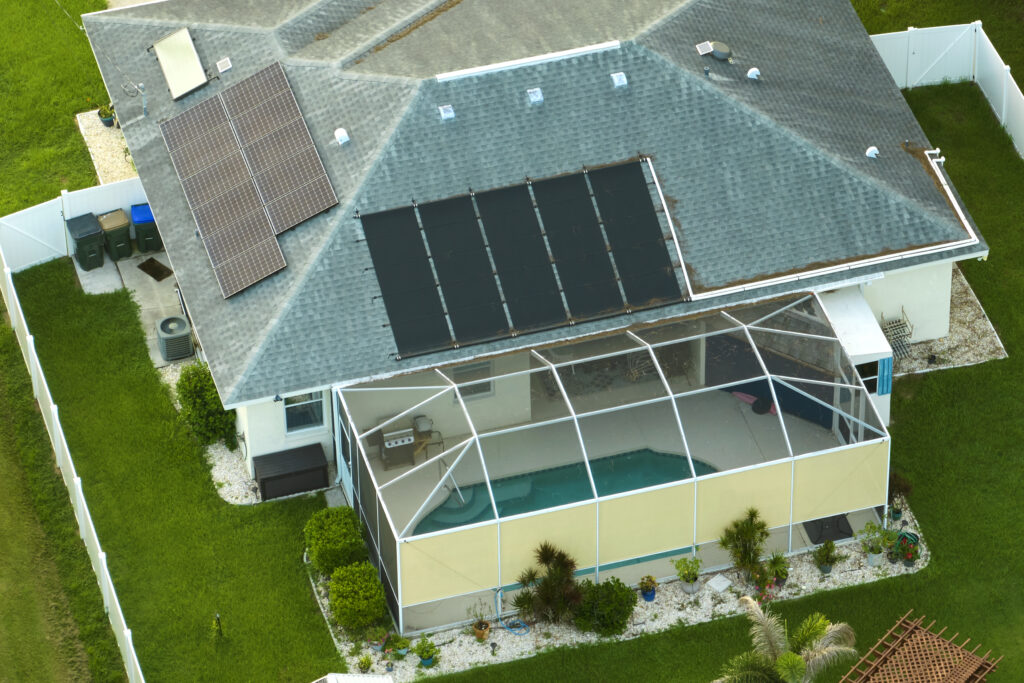
Solar thermal collectors need a surface that receives at least 6 to 8 hours of direct sunlight each day. Most homes with south- or west-facing roof sections are good candidates. Ground-mounted systems are also an option if roof space is limited or not ideally positioned.
Your Existing Equipment
In most cases, your current pump and plumbing can be incorporated into the solar system. An installer will evaluate your setup and design a system that ties in cleanly. If you already have pool automation, it can typically be integrated with the solar controls as well.
Your Swim Season Goals
If extending your season into spring and fall is the goal, a pool solar heater is well suited for that. Solar performs best in mild, sunny conditions, which is also when a gas heater alone tends to run constantly just to keep up.
A qualified dealer can assess your property and set realistic expectations for your specific pool.
What Is the Installation Process Like?
Adding solar does not mean days of disruption or major changes to your existing equipment. Most installations are completed in less than a day by an experienced crew. Collectors are mounted on the roof or on a ground rack, and the plumbing connections tie into your existing system with minimal impact on your setup.
Will It Change How You Use Your Pool?
Not in any complicated way. If you have an automation system, the solar heater plugs into it and manages water flow based on conditions. You set your target temperature, and the system handles the rest. Manual operation is also an option for simpler above-ground setups.
For pools with an attached spa, a hybrid pool heater setup offers a bonus: solar preheating can significantly cut spa heat-up times compared to relying on gas alone.
Solar requirements are continuing to expand, as seen in California’s updated Title 24 standards. More pool owners are discovering that a hybrid approach is both the practical and cost-effective path forward.
Start Swimming More and Spending Less
At Aquatherm, we have been manufacturing solar pool heating systems since 1976, right here in the United States. Our systems are built to work alongside your existing setup, and our trained dealer network can design a hybrid pool heater solution tailored to your pool and property. Whether you want to cut energy costs, extend your swim season, or simply get more out of the investment you have already made, adding a pool solar heater is one of the smartest upgrades you can make. Find a dealer near you or learn more about residential solar pool heating to get started.

Pool Solar Heater FAQs
Can I add a pool solar heater without removing my current heater?
Yes. A pool solar heater is designed to work alongside your existing gas or electric heater, not replace it. Solar handles the primary heating load, and your current heater acts as a backup. You maintain full reliability while significantly reducing the energy your backup actually uses.
What is a hybrid pool heater?
A hybrid pool heater pairs a solar thermal system with a gas or electric backup heater. Solar preheats the water and handles most of the heating during sunny hours. The backup activates only when needed, which can reduce pool heating costs by 50% to 100% depending on your location and usage habits.
How much roof space do I need for a solar pool heater?
It depends on your pool size, location, and temperature goals. In general, collectors should receive six to eight hours of direct sunlight daily. A local Aquatherm dealer will evaluate your property and design a properly sized system based on your pool and target swim season.
Will adding solar change how I operate my pool?
Not in a significant way. Most systems integrate with your existing pool automation and operate automatically based on conditions and your temperature setting. If you do not have an automation system, your installer can recommend one. Manual operation is also available for simpler setups.
Does a pool solar heater work during cooler months?
Yes. Solar panels generate heat based on sunlight availability, not just air temperature. They can still collect meaningful heat on cool but sunny days. A hybrid pool heater is especially effective in shoulder seasons, with solar doing as much as conditions allow and the backup handling the rest.