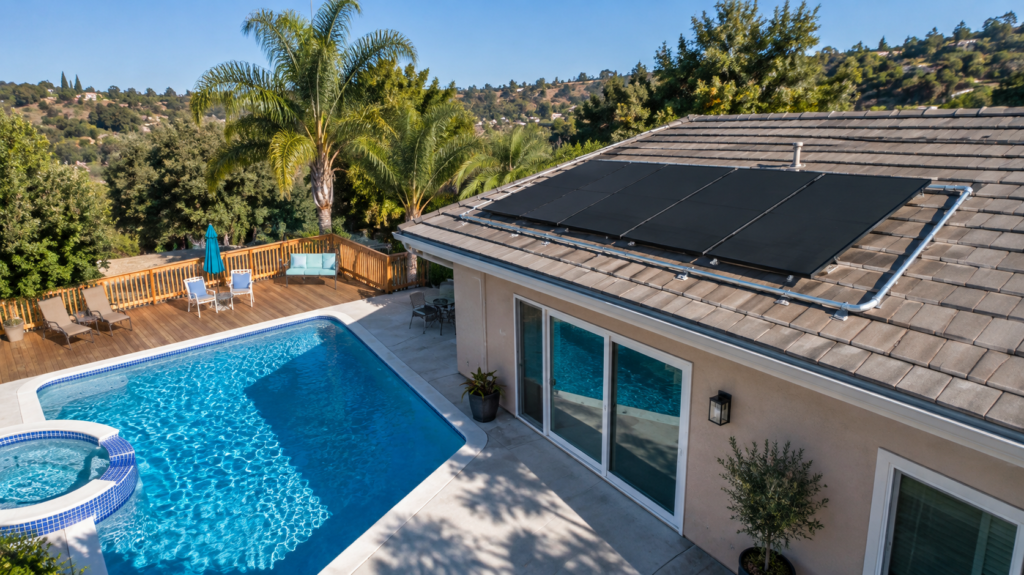
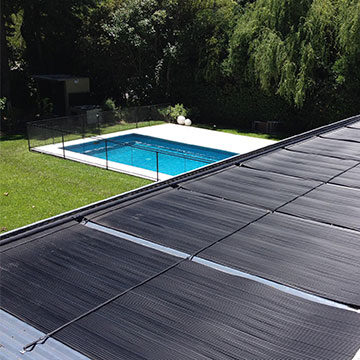
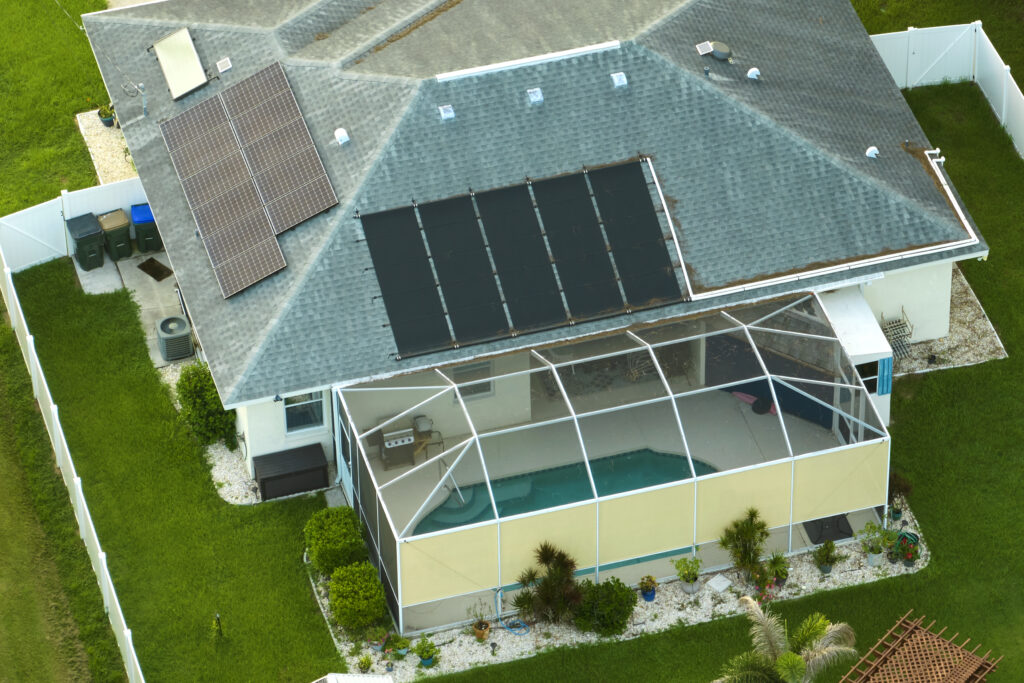
You want your pool warm from the first swim in spring to the last swim in fall, but you don’t want a high energy bill to go with it. A hybrid pool heater solves that problem by combining two heat sources instead of relying on just one. Solar panels warm the water, using free energy from the sun. Then, only when needed, a backup heater tops off the temperature. This means your pool stays warm and consistent, no matter what the weather is doing.
Here’s how it works, and why so many pool owners are switching to this approach.
What Is a Hybrid Pool Heater?
A hybrid pool heater is a system that uses two heat sources working together instead of one working alone. Solar panels do the first pass, warming pool water using sunlight. If the water needs more heat after that, it flows into a traditional gas or electric heater, which finishes the job.
This is different from most single-source pool heating systems, which rely on one method the whole time. A gas or electric heater alone burns fuel and leaves a higher bill every time your pool needs warmth. A solar-only system supplies free heat, but may need supplemental heating depending on the pool owner’s preferences. A hybrid pool heater gets the best of both.
How Does a Hybrid Pool Heater Work?
Water always hits solar heating first before it reaches your backup heater. This setup is what makes the whole system efficient.
Solar Does the Heavy Lifting
Your pool’s existing filter pump pushes water through solar collectors, usually mounted on your roof or a nearby rack. As water passes through, it absorbs heat from the sun. On warm, sunny days, this alone is often enough to keep your water at the perfect temperature. You can see the full process here if you want the details on how solar collectors capture and transfer heat.
The Backup Heater Fills the Gaps
When solar can’t quite reach your target temperature, the backup heater switches on automatically. It only runs long enough to close the gap, not the whole time. That means far less fuel use compared to running a gas or electric heater as your only source of heat.

Using Solar and a Fossil-Fuel Heater Together
Pairing two pool heating methods instead of picking just one gives you flexibility that neither source offers by itself. A few reasons pool owners make the switch:
- Lower energy bills. Solar handles most of the heating load for free, so your backup heater runs far less often.
- Consistent water temperature. You’re not stuck waiting for a sunny day to enjoy a warm swim.
- A longer swim season. Backup heat means you’re not limited to the warmest months of summer.
- Less strain on your backup heater. Since solar does most of the work, your gas or electric unit lasts longer with less wear.
This kind of setup is popular with homeowners who already own a residential pool heating system and want to cut costs without giving up reliable warmth. It also works well for larger properties. Many commercial pools use the same approach to manage heating costs across a much bigger volume of water.
Is a Hybrid Pool Heater Right for Your Pool?
If you’re building a new pool or replacing an aging heater, it’s worth comparing your options before you decide. Pool heating systems vary quite a bit in upfront cost, monthly cost, and how much sun exposure your yard actually gets.
If you already have a gas or electric heater, adding solar as a pre-heater is often the simplest upgrade. You keep the backup heater you trust, but it runs far less often. You can read more about adding solar to an existing heater to see how that process works.
If cost is your biggest concern, it also helps to understand how pool heater costs break down so you know what to expect before you talk to a dealer.
Start Swimming More With Aquatherm
We’ve been building solar pool heating systems in the USA since 1976, and we know hybrid setups are one of the smartest ways to keep a pool warm without an expensive energy bill. Every panel we manufacture goes through more than 40 quality checks before it reaches your backyard, so you can count on reliable performance for years. If you’re ready to stop watching the forecast and start enjoying a warm pool on your own schedule, find a dealer near you or explore our residential solar pool heating options to get started.

Hybrid Pool Heater FAQs
What is a hybrid pool heater?
A hybrid pool heater combines solar panels with a gas or electric heater. Solar warms the water first, using free heat from the sun. If more warmth is needed, the backup heater finishes the job. This keeps your pool warm while cutting down on fuel use.
How is a hybrid pool heater different from solar alone?
Solar-only systems rely completely on sunlight, so heating can slow down on cloudy days or during cooler months. A hybrid pool heater adds a backup source, so your pool stays at a steady temperature no matter the weather.
Does the backup heater run all the time?
No. In most hybrid systems, solar handles the full heating load during peak season. The backup heater only turns on during weaker sun periods, like spring and fall, closing the gap rather than doing all the work.
Will a hybrid pool heater lower my energy bills?
Yes. Since solar does most of the heating for free, your backup heater runs far less often than it would on its own. Many pool owners see a noticeable drop in fuel or electric costs after switching to this setup.
Can I add solar to a heater I already own?
Yes. Solar panels can usually be added to an existing gas or electric heater to create a hybrid pool heater. Water passes through the solar collectors first, reducing how much work your current heater has to do.
Is a hybrid setup worth it for a commercial pool?
Often, yes. Commercial pools use much more water and energy than residential ones, so the savings from solar preheating tend to be even larger. A dealer can evaluate your property to estimate potential savings.